Animal ingredients rarely appear on labels as "pig" or "insect". They show up as casein, carmine, L-cysteine, isinglass — chemical-sounding names that give nothing away. This guide lists the non-vegan ingredients to avoid, grouped by where they actually come from: dairy, egg, insects, fish, slaughter byproducts and wool.
What are the most common hidden animal ingredients?
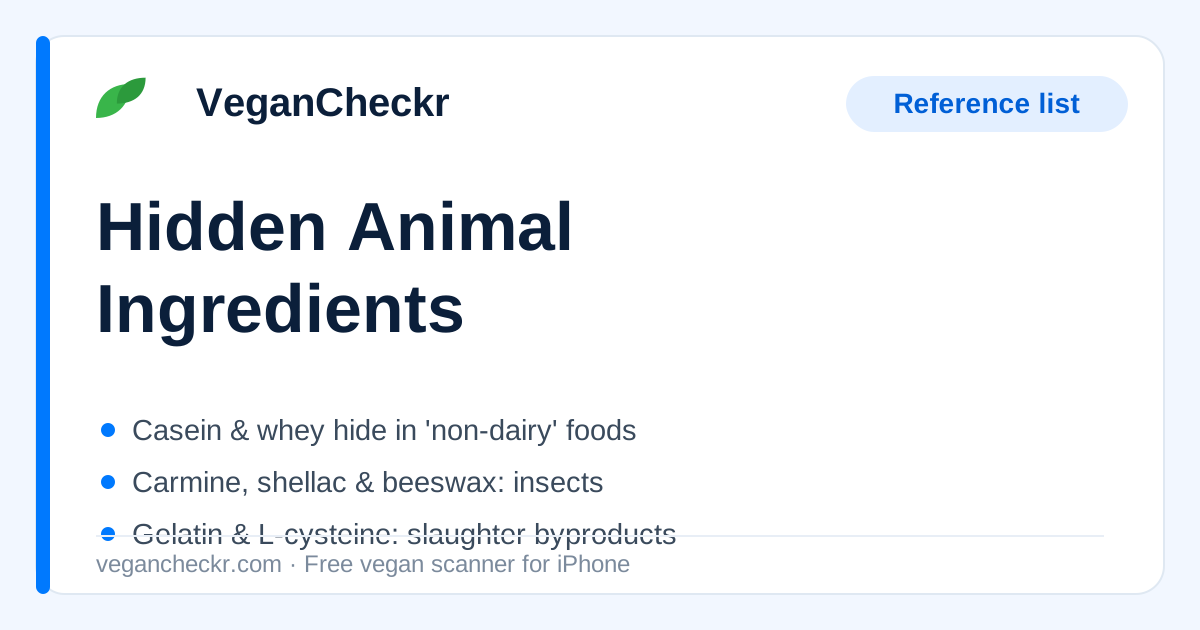
The most common hidden animal ingredients fall into six source groups. Dairy derivatives — casein (often listed as sodium caseinate), whey and lactose — turn up in "non-dairy" creamers, crisps and chocolate. Egg derivatives include albumin in baked goods and fresh pasta, and lysozyme (E1105) in some hard cheeses. Insect-derived ingredients are carmine (E120), the red dye made from cochineal insects; shellac (E904), the glaze on shiny sweets; and beeswax (E901). Fish-derived ones include isinglass, a beer and wine fining agent that never reaches the label; fish-oil omega-3 in fortified foods; and anchovy in Worcestershire sauce. Slaughter byproducts include gelatin in gummies and marshmallows, animal rennet in traditional cheeses, and L-cysteine (E920) in industrial breads. Finally, the vitamin D3 added to cereals, juices and some plant milks is usually made from lanolin, the grease in sheep's wool. When a label term sounds technical — or suspiciously wholesome — the ingredient list, not the front of the pack, settles it.
Why animal ingredients hide in plain sight
Three things make label reading harder than it should be. First, naming: gelatin doesn't say "boiled skin and bones", and E120 doesn't say "crushed cochineal insects". Second, ambiguity: additives like E471 can be made from either vegetable oil or animal fat, and the label almost never says which. Third, processing aids: substances like isinglass and bone char are used during production, then removed — so they legally don't appear on the ingredient list at all.
In the EU, additives are regulated under Regulation (EC) No 1333/2008, which governs safety — not whether an E-number is vegan. No jurisdiction currently requires a "contains animal derivatives" flag, so the burden of decoding falls on you.
 Check it in seconds with VeganCheckr
You don't need to memorize this list — the scanner carries it for you:
- Open VeganCheckr and tap Scan, then point your camera at the barcode.
- No barcode? Use the ingredient label scan to photograph the printed list instead.
- Read the verdict — hidden ingredients like carmine, gelatin or whey are flagged by name, with the reason shown.
The hidden animal ingredients list, grouped by source
Every entry below is animal-derived or commonly animal-derived. The last column tells you whether a functional vegan alternative exists — in almost every case, it does.
| Ingredient | Where it hides | Vegan alternative? |
|---|---|---|
| Dairy derivatives | ||
| Casein / sodium caseinate | "Non-dairy" creamers, protein bars, crisps, processed foods | Yes — soy or pea protein |
| Whey / whey powder | Crisps, baked goods, chocolate, protein powders | Yes — plant protein powders |
| Lactose | Savory seasonings, baked goods, many medications | Yes — dextrose, maltodextrin |
| Egg derivatives | ||
| Albumin (albumen) | Protein bars, baked goods, fresh pasta, wine fining | Yes — aquafaba, plant proteins |
| Lysozyme (E1105) | Ripened hard cheeses, some wines — extracted from egg white | Yes — cheeses made without it |
| Egg lecithin (E322) | Rare; most lecithin is soy or sunflower | Yes — soy/sunflower lecithin |
| Insect-derived | ||
| Carmine (E120, cochineal extract) | Red sweets, yogurts, juices, icings — made from cochineal insects | Yes — beetroot red (E162), anthocyanins (E163) |
| Shellac (E904) | Glazed sweets, chocolate beans, coffee beans, wax on citrus and apples | Yes — carnauba wax (E903) |
| Beeswax (E901) | Glazing agent on sweets, gummies and fruit | Yes — carnauba, candelilla wax |
| Honey | Granola, cereals, breads, sauces, "natural" sweets | Yes — maple, agave, date syrup |
| Fish-derived | ||
| Isinglass | Fining agent in cask beers and some wines — never on the label | Yes — bentonite, pea protein finings |
| Omega-3 (EPA/DHA) from fish oil | Fortified juices, breads, spreads, "omega-3" eggs and milks | Yes — algal oil omega-3 |
| Anchovy | Worcestershire sauce, Caesar dressing, some tapenades | Yes — anchovy-free versions |
| Slaughter byproducts | ||
| Gelatin | Gummies, marshmallows, some yogurts and desserts, vitamin capsules | Yes — pectin, agar-agar |
| Animal rennet | Traditional cheeses: Parmigiano Reggiano, Grana Padano, Pecorino Romano, Gorgonzola | Partly — microbial rennet cheeses (but not for those protected names) |
| L-cysteine (E920) | Dough conditioner in bagels and industrial breads; traditionally from feathers or bristles | Yes — fermentation-derived L-cysteine |
| Lard | Pastry, biscuits, refried beans, some tortillas | Yes — vegetable shortening |
| Tallow | Frying fat, some margarines and snack production | Yes — vegetable oils |
| Fatty acids / stearic acid (E570) | Anti-caking and coating uses — usually plant-derived, but can be tallow; labels don't say | Yes — the plant version is identical |
| Mono- and diglycerides (E471) | Bread, margarine, ice cream — usually plant-derived, occasionally animal fat | Yes — plant-sourced E471 |
| Bone char | Filter used to whiten some cane sugar, mainly in the US — never on the label | Yes — beet, organic or unrefined sugar |
| Wool-derived | ||
| Vitamin D3 (cholecalciferol) | Fortified cereals, juices, some plant milks, supplements — usually made from lanolin | Yes — lichen-derived D3, or vitamin D2 |
The five sneakiest cases, explained
1. "Non-dairy" does not mean dairy-free
In the US, a creamer can legally be labeled "non-dairy" while containing sodium caseinate — milk protein. The fine print will say "(a milk derivative)", and allergen rules require milk to be declared, but the front of the pack still says non-dairy. If you only remember one thing from this page, make it this: marketing terms mean little; the ingredient list is what counts.
2. Processing aids never make the label
Isinglass — collagen from fish swim bladders — has been used for centuries to clarify beer and wine, and because it's filtered out before bottling, it isn't listed anywhere. Guinness famously dropped it in 2016 (the full story is in our Guinness guide). The same logic applies to bone char in cane sugar: some refineries, mainly in the US, whiten sugar through charred cattle bone, while beet sugar never touches it — a distinction documented in detail by the Vegetarian Resource Group. Our guides on wine and beer cover how to check specific drinks.
3. The ambiguous E-numbers
E471, E570 and E322 are chemically identical whether they come from soybean oil or rendered animal fat, so manufacturers aren't required to state the source. Most production today uses vegetable oils because they're cheaper, but "most" isn't "all". The full list of additives worth checking is in our non-vegan E-numbers guide.
4. Carmine's many aliases
The red dye E120 is made from dried cochineal insects — on the order of 100,000 insects per kilogram of dye. You'll see it written as carmine, cochineal extract, Natural Red 4 or CI 75470. Since 2011, US labels must name it explicitly as "carmine" or "cochineal extract" under FDA color additive rules (21 CFR 73.100), largely because of allergic reactions — which at least makes it findable.
5. Vitamin D3 in "plant-based" fortified foods
Fortification is a blind spot: most vitamin D3 is produced from lanolin, the waxy grease in sheep's wool, and it turns up in fortified cereals, juices and even some plant milks. Lichen-derived D3 and vitamin D2 are the vegan versions — products certified vegan will use one of them. (For personal supplement advice, talk to a health professional.)
If a label term sounds technical, check it — and if it sounds wholesome, check it anyway. "Natural" is where animal ingredients hide best.
How to spot hidden animal ingredients on any label
A practical field method: scan the ingredient list for the big seven — gelatin, carmine/E120, casein, whey, lactose, honey, shellac/E904 — then check the allergen line for milk, egg and fish, which catches most derivatives instantly. Anything ambiguous (E471, E570, mono- and diglycerides, "natural flavors") needs a second source: a vegan certification mark, the manufacturer, or a product database. Our label-reading field guide walks through the whole routine.
Make your own avoidance list automatic
If specific ingredients on this page matter most to you, set them once and forget the list:
- In VeganCheckr, add ingredients like carmine, gelatin or whey to your personal avoidance alerts.
- Scan any barcode — or photograph the label with the ingredient scan when there's no barcode.
- The app flags your listed ingredients plus ambiguous additives like E471, and suggests alternatives in the same category.
Frequently asked questions
What are the most common hidden animal ingredients in food?
Gelatin, carmine (E120), casein, whey, L-cysteine (E920), shellac (E904) and isinglass are the ones you'll meet most often. Gelatin and carmine alone account for a huge share of flagged sweets, yogurts and drinks.
Can a product labeled non-dairy still contain milk?
Yes. Under US rules, "non-dairy" creamers may contain sodium caseinate, a milk protein — the label just has to flag it as a milk derivative. "Dairy-free" and "vegan" claims are stricter, but the ingredient list is the only thing you can fully trust.
Are E471 and E570 always animal-derived?
No. Mono- and diglycerides (E471) and fatty acids (E570) are usually made from vegetable oils, but they can come from animal fat, and the label rarely says which. A vegan label, a declared plant source, or a scanner check settles it.
Why don't isinglass and bone char appear on ingredient labels?
They are processing aids, not ingredients: isinglass clarifies beer and wine, bone char filters some cane sugar, and both are removed before the product is sold. Because they don't have to be declared, you have to rely on the producer's statement or a product database.
Is the vitamin D3 in fortified foods vegan?
Usually not. Most vitamin D3 (cholecalciferol) is made from lanolin, the grease in sheep's wool. Vegan D3 made from lichen exists, and vitamin D2 (ergocalciferol) is always vegan — products certified vegan use one of these.
Check any product in seconds
VeganCheckr scans barcodes and ingredient labels, flags hidden animal ingredients and E-numbers, and shows you the evidence. Free on the App Store.

 Scan with your iPhone camera