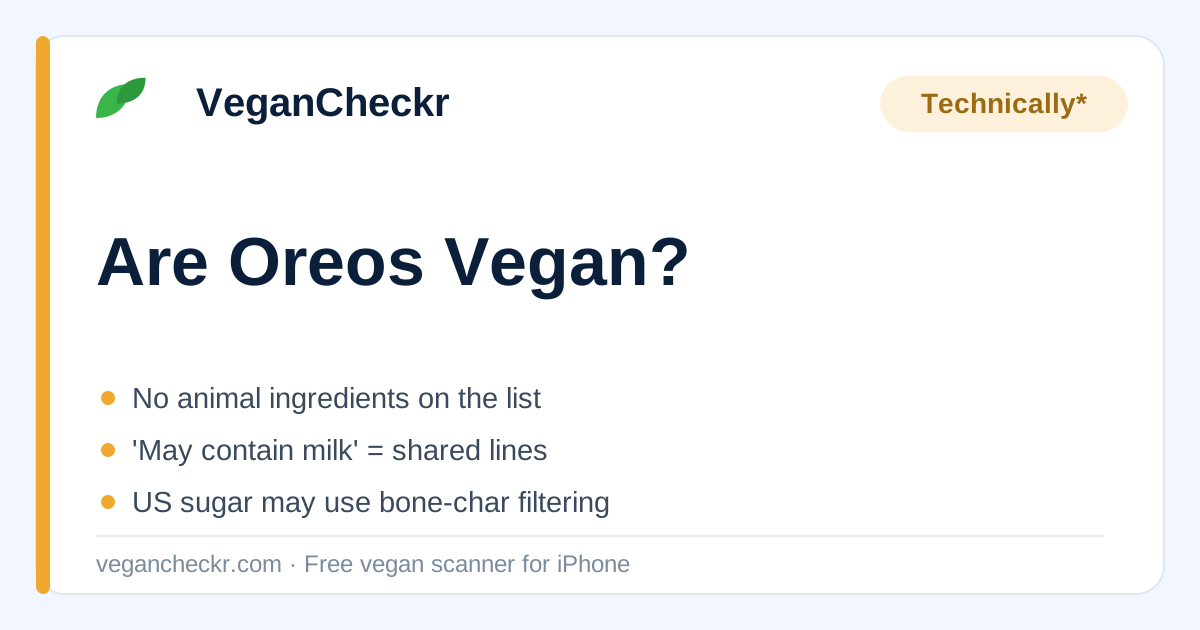
≈ Technically vegan Classic Oreos contain no animal-derived ingredients. But the pack says "may contain milk" — a cross-contact warning, not a recipe ingredient — and in the US, the sugar may have been filtered through bone char. Whether that makes them vegan depends on where you personally draw the line.
That one-paragraph answer hides a genuinely interesting argument that has been running in vegan circles for years. Let's take it apart properly: what's in the cookie, what Mondelez actually says, why the sugar is the real sticking point, and how the three main camps of vegans handle it.
What's actually in an Oreo?
Here is the current US ingredient list for classic Oreo chocolate sandwich cookies, as of 2026:
Unbleached enriched flour (wheat flour, niacin, reduced iron, thiamine mononitrate, riboflavin, folic acid), sugar, palm oil, soybean and/or canola oil, cocoa (processed with alkali), high fructose corn syrup, leavening (baking soda and/or calcium phosphate), salt, soy lecithin, chocolate, artificial flavor.
Go through it item by item and every single ingredient is plant-derived, mineral or synthetic:
- Flour, cocoa, corn syrup, vegetable oils — all plants. The "chocolate" listed is unsweetened cocoa solids, with no milk component.
- Soy lecithin — an emulsifier extracted from soybeans. Lecithin can come from egg yolk in other products, but soy is declared here. We cover the difference in our guide to E322 soy lecithin.
- Leavening and salt — minerals, no animal involvement.
- Artificial flavor — synthesized in a lab (the vanilla note is vanillin). Ironically, that's more transparent than "natural flavors," which can legally hide animal-derived sources — a loophole we unpack in Are Natural Flavors Vegan?
Recipes vary slightly by country, but the standard cookie lists no dairy, no eggs, no gelatin and no other animal ingredient anywhere in the world. And famously, no milk in "milk's favorite cookie." So why isn't this article three sentences long?
The "may contain milk" warning, decoded
Flip the pack over and under the ingredient list you'll find an advisory: may contain milk. This is a precautionary allergen label. Oreos are made in facilities that also run dairy-containing products, so trace amounts of milk could theoretically end up in a cookie. It is a warning for people with milk allergies — it does not mean milk is added to the recipe.
Mondelez's official position reflects exactly that nuance. The Oreo UK FAQ currently states: "Many OREO products are suitable for Vegans but may include cross-contaminants of milk, so please check allergen advice" — and points readers to The Vegan Society's website for its list of vegan-certified Oreo products. That's a notable softening from the brand's older blanket line that Oreos were "not suitable for vegans" because of milk cross-contact.
Does cross-contact make a food non-vegan? Most vegan organizations say no. The Vegan Society defines veganism as excluding animal exploitation "as far as is possible and practicable" — and trace contamination from shared equipment isn't a use of animals, it's a manufacturing reality. No animal was farmed to put those molecules there.
 Check it in seconds with VeganCheckr
Instead of squinting at the fine print in the cookie aisle, let the scanner read it:
- Open VeganCheckr and tap Scan.
- Point your camera at the barcode on any Oreo pack — any variety, any country.
- Read the verdict with evidence: flagged ingredients are listed by name, so you can see for yourself that the classic recipe contains no dairy.
- Add milk to your personal avoidance alerts and every future scan will warn you the moment a variety actually contains it.
The bone char problem with US sugar
The stronger objection isn't the milk warning — it's the second ingredient. Some US cane sugar refineries decolorize sugar by filtering it through bone char: charred cattle bones that act as a bleaching filter. None of the bone ends up in the sugar, but an animal product was used to make it.
Here's the catch with Oreos specifically: Mondelez buys sugar at enormous scale from multiple suppliers, so there is no practical way to know whether the sugar in any given pack touched bone char. Beet sugar — which dominates in Europe — is never processed this way, and neither is certified-organic cane sugar. The Vegetarian Resource Group's refinery survey is the classic reference on which processors use bone char.
If this is new to you, our full explainer Is Sugar Vegan? The Bone Char Question Explained goes deeper — including which everyday brands are bone-char-free.
The three camps: how vegans actually handle Oreos
Ask ten vegans about Oreos and you'll hear three answers. All three are internally consistent — they just weigh the same facts differently.
| Camp | Verdict | Reasoning |
|---|---|---|
| "Read the ingredients" | Yes, vegan | No animal ingredients in the recipe. Cross-contact is an allergen issue, not an ethics issue, and obsessing over untraceable sugar processing makes veganism look impossible. PETA has long told new vegans not to stress over micro-issues like bone-char-filtered sugar. |
| "Depends where you buy" | Vegan in Europe, questionable in the US | EU sugar is mostly beet-derived and bone-char-free, and the UK FAQ now calls many Oreo products suitable for vegans. US packs carry the bone char uncertainty, so this camp saves their Oreo habit for the European recipe. |
| "Supply chain matters" | No | Bone char in the sugar chain plus dairy running on shared lines means animal use is baked into the product's production, even if not its recipe. Some in this camp also skip Oreos over palm oil, which is vegan but environmentally contentious. |
An Oreo's ingredient list is vegan; its supply chain is where the argument lives. The label can't settle an ethics question — but you should at least read it before picking a side.
Which Oreos are vegan-friendly — and which never are
The verdict above only covers the classic cookie. Oreo ships dozens of varieties and limited editions, and several of them add outright dairy or egg. Here's where the main US varieties stand as of August 2026 — recipes change, so treat this as a snapshot, not scripture:
| Variety | Animal ingredients listed? | Notes |
|---|---|---|
| Original / Classic | None | "May contain milk" cross-contact advisory only |
| Double Stuf | None | Same recipe base, more creme |
| Golden | None | Vanilla wafer, same caveats as classic |
| Oreo Thins | None | Same caveats as classic |
| Fudge Covered / White Fudge | Milk | The fudge coating contains dairy — not vegan |
| Oreo Cakesters | Milk and eggs | Soft snack cakes with a completely different recipe — not vegan |
| Limited editions & regional flavors | Varies | Some add milk in the creme or coating — check every new label |
The pattern is simple: the closer a variety gets to actual chocolate coating or cake, the more likely dairy shows up. Seasonal releases are the biggest trap, because a flavor you've checked before can behave differently in its holiday edition. Our guide on how to read food labels as a vegan covers the fast way to audit any new pack — and Oreos aren't unique here; Skittles went through their own reformulation saga, which we cover in Are Skittles Vegan?
New limited edition? Scan the label
When a new flavor drops and the database hasn't caught up yet:
- Tap ingredient scan and photograph the printed ingredient list on the pack.
- VeganCheckr analyzes every ingredient and flags anything animal-derived or ambiguous.
- Save the product so the verdict is waiting in your history next time — even offline.
The bottom line
By ingredients, classic Oreos are vegan — and always have been within living memory (the animal lard in the original recipe was phased out decades ago). By strict supply-chain standards, US packs carry an unresolvable question mark over the sugar, and every pack carries a milk cross-contact advisory that matters for allergies, not ethics.
Most practicing vegans eat them. Some don't. Both positions are defensible — what isn't defensible is grabbing a fudge-covered pack on autopilot and assuming it's the same recipe. Check the label, or let your phone do it for you.
Frequently asked questions
Do Oreos contain milk or eggs?
The classic Oreo recipe lists no milk, eggs or any other animal ingredient. The creme filling is made from sugar, palm oil, vegetable oils and soy lecithin. The "may contain milk" line on the pack is a cross-contact warning for allergy sufferers, not a recipe ingredient.
Are Golden Oreos vegan?
Golden Oreos are in the same position as classic Oreos: no animal-derived ingredients on the label, but the same "may contain milk" cross-contact warning and, in the US, the same uncertainty about whether the sugar was filtered through bone char.
Why does the pack say "may contain milk"?
Oreos are produced in facilities that also handle dairy products, so trace amounts of milk could end up in a cookie. The warning is a voluntary allergen advisory aimed at people with milk allergies. Milk is not added to the recipe.
Is the sugar in Oreos vegan?
It depends on the refinery. Some US cane sugar refiners filter sugar through bone char made from cattle bones, and Mondelez buys sugar from many suppliers, so individual packs can't be traced. Beet sugar, common in Europe, is never processed with bone char.
Are Oreos vegan in the UK and Europe?
As of 2026, the official Oreo UK FAQ says many Oreo products are suitable for vegans but may include cross-contaminants of milk, and points to The Vegan Society's website for its list of vegan-certified products. European sugar is also mostly beet-derived, which sidesteps the bone char issue.
Check any product in seconds
VeganCheckr scans barcodes and ingredient labels, flags hidden animal ingredients and E-numbers, and shows you the evidence. Free on the App Store.

 Scan with your iPhone camera