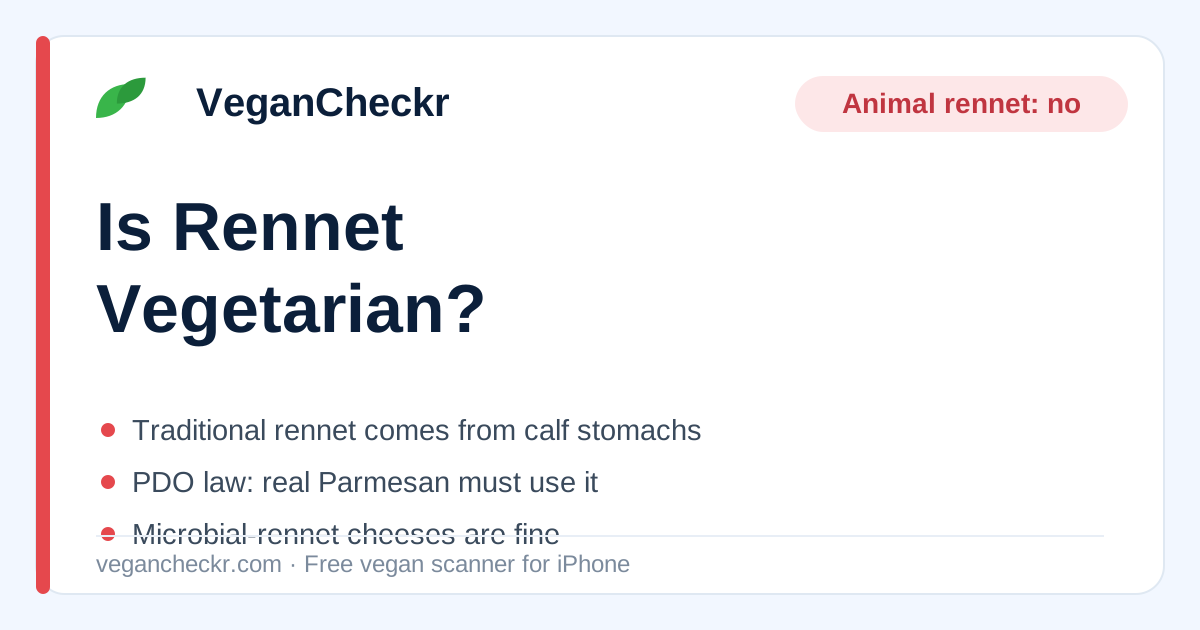
✗ Not vegetarian Animal rennet is not vegetarian — it’s extracted from the stomach lining of slaughtered calves, lambs or kids. Microbial rennet, plant rennet and fermentation-produced chymosin are vegetarian, and most modern cheese uses them. The catch: some famous cheeses are legally required to use the animal version.
What rennet is and why cheese needs it
Rennet is a preparation of milk-clotting enzymes — mostly chymosin, with some pepsin — that cheesemakers add to milk to split it into solid curds and liquid whey. Without a coagulant of some kind, most cheese simply doesn’t happen.
Traditional animal rennet is extracted from the abomasum, the fourth stomach chamber, of unweaned calves, lambs or kids. The animal is slaughtered first; rennet is a by-product of veal and meat production. That’s why it fails the vegetarian test: vegetarians avoid slaughter by-products, not just the meat itself.
The confusing part is that rennet does its job early and mostly vanishes — only enzyme traces remain in the finished cheese. That’s also why it can hide behind vague words on the label, which we’ll get to below.
The four types of rennet — and which are vegetarian
“Rennet” on a label tells you almost nothing by itself, because there are four very different sources:
| Type | Where it comes from | Vegetarian? |
|---|---|---|
| Animal rennet | Stomach lining (abomasum) of unweaned calves, lambs or kids — a slaughter by-product | No |
| Microbial rennet | Coagulating enzymes from fungi such as Rhizomucor miehei, grown by fermentation | Yes |
| Fermentation-produced chymosin (FPC) | Microbes carrying a copy of the chymosin gene produce the enzyme in fermentation tanks; no animal tissue in the process or product | Yes |
| Plant (“vegetable”) rennet | Cardoon thistle, fig sap and a few other plants — traditional in some Portuguese and Spanish cheeses | Yes |
FPC now dominates industrial cheesemaking: per estimates gathered by the Vegetarian Resource Group, roughly 90% of commercial cheese in the United States is made with it. So statistically, most supermarket cheese is vegetarian — the problem is knowing which cheeses fall in the other 10%.
Which cheeses have animal rennet?
Here’s the practical split. Some cheeses are locked into animal rennet by law; most others depend on the producer.
| Cheese | Rennet rule | Vegetarian? |
|---|---|---|
| Parmigiano Reggiano (PDO) | Product specification allows only raw milk, salt and calf rennet | Never |
| Grana Padano (PDO) | Calf rennet required; usually also lysozyme (E1105) from egg white | Never |
| Pecorino Romano (PDO) | Lamb rennet required | Never |
| Gorgonzola (PDO) | Calf rennet required | Never |
| “Parmesan” sold in the EU | The name is reserved for genuine Parmigiano Reggiano | Never |
| US-made “parmesan” | Generic style — producer’s choice; often microbial or FPC | Check the label |
| Stilton (PDO) | Spec permits either; most producers use vegetarian rennet, and traditional-rennet versions are clearly marked | Usually |
| Mass-market cheddar, mozzarella & co. | Mostly FPC or microbial rennet, but not guaranteed | Usually — check |
| Paneer, ricotta, cream cheese, mascarpone, quark | Acid-set — traditionally made without any rennet | Usually |
Locked in by law: the PDO cheeses
PDO (Protected Designation of Origin) status means a cheese must follow a legally binding recipe to carry its name. For Parmigiano Reggiano, that recipe is raw milk, salt and calf rennet — nothing else. Grana Padano also mandates calf rennet, and most wheels additionally contain lysozyme, a preservative extracted from hen egg white (listed as E1105 — one of many additives covered in our non-vegan E-numbers guide). Pecorino Romano must use lamb rennet; Gorgonzola must use calf rennet.
If the name on the wheel is protected — Parmigiano Reggiano, Grana Padano, Pecorino Romano, Gorgonzola — the animal rennet isn’t a recipe choice. It’s the law.
A “vegetarian Parmigiano Reggiano” therefore cannot exist. Vegetarian Italian-style hard cheeses do — they just have to trade under generic names like “Italian hard cheese” or “pasta cheese”. The same caution applies to many other traditional European PDO cheeses, so treat old-world names as animal-rennet by default until you’ve confirmed otherwise. Rennet is also one of the sneakier entries in our list of hidden animal ingredients, precisely because it so rarely appears on the front of the pack.
 Check any cheese in seconds with VeganCheckr
You don’t need to memorize PDO specifications — VeganCheckr detects animal rennet natively:
- Open VeganCheckr and tap Scan, then point your camera at the cheese’s barcode.
- Traditional animal-rennet cheeses like Parmigiano Reggiano, Grana Padano, Pecorino Romano and Gorgonzola are flagged automatically.
- Read the vegan / vegetarian / non-vegan verdict with the evidence — rennet and additives like E1105 are listed with the reason.
Is Parmesan cheese vegetarian?
✗ Not vegetarian Real Parmesan is never vegetarian. Within the EU, the Court of Justice ruled in 2008 (Case C-132/05) that the name “Parmesan” may only be used for genuine Parmigiano Reggiano — which, as above, must be made with calf rennet.
Outside the EU the picture is looser. In the US, “parmesan” is a generic style, and domestic producers frequently use microbial rennet or FPC, so an American parmesan can be vegetarian — but only the label (or a scan) will tell you. This is exactly the trap that catches pesto buyers too: traditional pesto is made with Parmigiano Reggiano or Pecorino, as we break down in Is Pesto Vegan? The Parmesan Problem.
How to spot rennet on a label (it hides well)
Rennet is unusually hard to catch by reading ingredients, for three reasons:
- “Enzymes” means anything. US labeling rules let producers list animal, microbial or fermentation-produced coagulants all as just “enzymes”. Two identical labels can hide two different rennets.
- Counter cheese has no label. Cheese cut and wrapped at a deli counter often carries no ingredient list at all.
- “Rennet” alone is ambiguous. Unless it says “microbial rennet”, “vegetarian rennet” or “fermentation-produced chymosin”, the word could mean the calf-derived kind.
The reliable positive signals are explicit ones: “suitable for vegetarians”, a vegetarian certification mark, or a named non-animal source. When a label only says “enzymes” or “rennet”, treat the source as unknown and check with the producer — or scan it. For the broader method, see our field guide on how to read food labels.
No barcode? Scan the label instead
For deli cheese, imports or anything with a vague ingredient list:
- Use ingredient scan to photograph the printed ingredient list — no barcode needed.
- Or type the ingredients (even just “rennet” or “enzymes”) into ingredient analysis to see their vegan and vegetarian status.
- Save the cheeses that pass to your list, and VeganCheckr can suggest alternatives in the same category for the ones that don’t.
Where this leaves vegans
For vegans, the rennet question is moot: every cheese in this guide is made from milk, so none of it is vegan regardless of which coagulant was used. Rennet detection matters most for vegetarians — and for vegans checking products containing cheese, like pesto, risotto mixes and stuffed pasta, where a flagged “Parmigiano Reggiano” or “Pecorino” in the ingredient list settles the question instantly.
Frequently asked questions
Is Parmigiano Reggiano ever vegetarian?
No. The PDO product specification allows only raw milk, salt and calf rennet, so every wheel of genuine Parmigiano Reggiano contains animal rennet. A version made with microbial rennet could not legally carry the name.
Is Parmesan sold in the US vegetarian?
Sometimes. In the US, “parmesan” is a generic style, so domestic producers can use microbial rennet or fermentation-produced chymosin — and many do. Imported Parmigiano Reggiano is never vegetarian, so check the label or scan the product to see which one you are holding.
Does Grana Padano contain egg?
Usually, yes. Most Grana Padano is made with lysozyme (E1105), a preservative extracted from hen egg white, on top of the calf rennet its specification requires. The Trentingrana variant is made without lysozyme but still uses calf rennet.
What does “enzymes” mean on a cheese label?
In the US, the FDA lets producers list any milk-clotting enzyme — animal, microbial or fermentation-produced — simply as “enzymes”, so the word alone doesn’t tell you the source. If a cheese is vegetarian, the label usually says so explicitly; when it only says “enzymes”, ask the producer or treat it as unknown.
Is rennet vegan?
No type of rennet makes cheese vegan. Animal rennet is a slaughter by-product, and even cheese made with microbial or plant rennet is still made from milk, so it is vegetarian at best. Only plant-based cheeses made without dairy are vegan.
Check any product in seconds
VeganCheckr scans barcodes and ingredient labels, flags hidden animal ingredients and E-numbers, and shows you the evidence. Free on the App Store.

 Scan with your iPhone camera