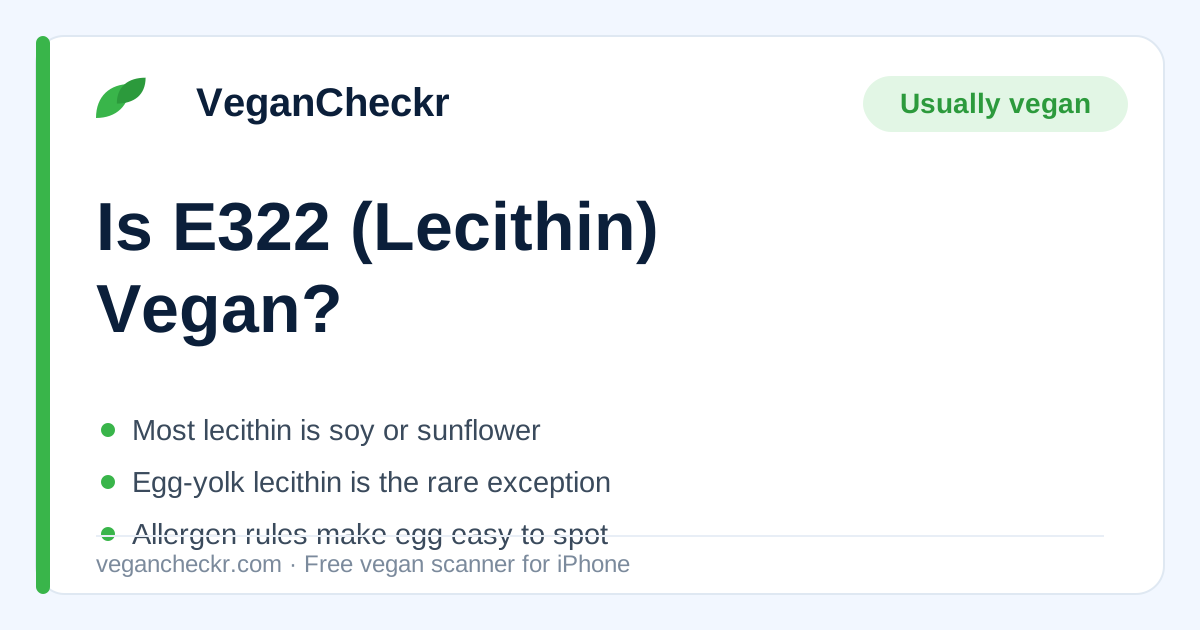
~ Usually vegan E322 (lecithin) is usually vegan. Almost all lecithin in food comes from soybeans or sunflower seeds — both plants. The exception is egg-yolk lecithin, which is rare in packaged food and must be declared as egg on the label. Check the bracketed source to be sure.
What is E322, and why is it in everything?
Lecithin is a mix of phospholipids — fat-like molecules with one end that loves water and one end that loves oil. That structure makes it a superb natural emulsifier: it holds fat and water together so products stay smooth instead of splitting.
That's why E322 turns up in an enormous range of foods: chocolate (it helps melted chocolate flow through machinery), margarine, bread and baked goods, instant drink powders, ice cream, and non-dairy milks. If you've read our breakdown of whether dark chocolate is vegan, you've already met lecithin — it's in nearly every bar.
Here's the catch for vegans. The EU's official specification, Commission Regulation (EU) No 231/2012, defines lecithins as phosphatides obtained "from animal or vegetable foodstuffs". The E-number alone doesn't tell you which one you got — the source does.
Where lecithin comes from — and which sources are vegan
In practice, the economics settle most of the question. Soybeans are by far the cheapest and most abundant source, so commercial food lecithin is overwhelmingly soy. Sunflower lecithin has grown fast as an allergen-free alternative, and rapeseed (canola) fills a smaller niche. Egg-yolk lecithin exists, but it's expensive and mostly used in pharmaceutical products rather than everyday groceries.
| Source | Vegan? | How common in food | Typical label wording |
|---|---|---|---|
| Soybean | Yes | The default — most E322 worldwide | "soya lecithin", "lecithin (soy)", "E322 (soya)" |
| Sunflower seed | Yes | Increasingly common allergen-free option | "sunflower lecithin", sometimes plain "lecithin" |
| Rapeseed (canola) | Yes | Occasional | "rapeseed lecithin", sometimes plain "lecithin" |
| Egg yolk | No | Rare in groceries; mainly pharma and specialty products | "egg lecithin", "lecithin (egg)" |
So the honest answer to "is soy lecithin vegan" is simply yes — soy is a bean. The real question is whether the unlabelled word "lecithin" on a package could be hiding egg. Almost never, and the reason is allergen law.
How to tell soy from egg on the label
Both soy and egg sit on the official allergen lists on either side of the Atlantic. In the EU, Regulation (EU) No 1169/2011 requires all fourteen regulated allergens — soy and egg included — to be named and visually emphasised in the ingredient list. That's why European labels read "emulsifier: lecithin (soya)" or "Sojalecithin". In the US, FDA allergen labelling rules under FALCPA require the same disclosure: "lecithin (soy)" in the list, or a "Contains: soy" line under it — and egg is a major allergen with identical treatment.
That legal plumbing does the detective work for you:
| The label says | What it means for vegans |
|---|---|
| "Soya lecithin" / "lecithin (soy)" | Vegan — plant source declared |
| "Sunflower lecithin" | Vegan — plant source declared |
| "Lecithin" or "E322" with no allergen mention | Almost certainly plant-derived (sunflower or rapeseed) — egg would have to be declared |
| "Egg lecithin" / "lecithin (egg)" | Not vegan |
If E322 came from egg, the label has to tell you — egg is a regulated allergen in both the EU and the US. A bare "lecithin" with no allergen mention is almost always plant-derived.
The main caveats: allergen emphasis rules apply to prepacked food, so bakery counters, imports with sloppy labels and loose goods deserve more suspicion. When in doubt, treat unsourced lecithin as a question to resolve, not a reason to panic. Our guide to reading food labels as a vegan covers the same source-first logic for every ambiguous ingredient.
 Check E322's source in seconds with VeganCheckr
Instead of hunting for the bracketed source yourself, let the scanner read it:
- Open VeganCheckr and tap Scan, then point your camera at the barcode.
- No barcode? Use the ingredient label scan to photograph the printed list instead.
- Read the verdict with evidence. VeganCheckr's E322 handling was specifically tuned so lecithin with a declared plant source (soy, sunflower) is not flagged — you only get an alert when the source is genuinely unclear or animal-derived.
The egg lecithin exception: where it actually shows up
Egg-yolk lecithin is real, but it's a specialist ingredient. Its main markets are pharmaceuticals (notably intravenous fat emulsions) and some premium or clinical nutrition products — places where its cost is justified. In ordinary groceries it's a rarity.
There's also a labelling quirk that works in your favour. Foods that rely on egg's emulsifying power — mayonnaise, hollandaise, many creamy dressings — simply list "egg yolk" as an ingredient rather than adding purified E322. So when you see "E322" or "lecithin" printed on a packet, the odds it means egg are small even before you check for an allergen declaration.
One more distinction worth keeping straight: egg lecithin is non-vegan but perfectly vegetarian. If your concern is vegetarian rather than vegan status, E322 never needs a second look — unlike animal rennet in cheese, which fails both tests.
Is E322 safe to eat?
Yes, by every mainstream assessment. In its 2017 re-evaluation of lecithins (E322), the European Food Safety Authority found no safety concern at reported uses and saw no need to set a numerical acceptable daily intake — a status reserved for the most benign additives. A 2020 follow-up cleared its use even in foods for young infants, up to the permitted maximums.
Lecithin is also a normal part of many whole foods — eggs, soybeans, sunflower seeds. For vegans, E322 is purely a sourcing question, not a health question.
E322 vs E471: don't confuse the two emulsifiers
Vegans often lump E322 in with E471, but they're different problems. E471 (mono- and diglycerides) is made from fats that can be either vegetable or animal in origin, and labels frequently give you no source at all — genuine ambiguity. E322 nearly always comes with its source printed right there, because of allergen law.
If you want the full picture of which additives deserve real caution, our complete list of non-vegan E-numbers ranks them from "always animal" (like E120 carmine) to "usually fine" — and E322 sits firmly at the relaxed end. For anything else on a label that makes you pause, the vegan ingredient checker guide shows how to analyse a whole ingredient list at once.
Avoiding soy as well? Make the app do the remembering
Plenty of people are vegan and soy-free. VeganCheckr handles both at once:
- Type "lecithin" (or paste a whole ingredient list) into ingredient analysis for an instant vegan verdict.
- Add soy to your personal avoidance alerts so any product containing soy lecithin gets flagged for you — even though it's vegan.
- Save products you've cleared once, and your offline history keeps the verdicts available in the shop.
Frequently asked questions
Is soy lecithin vegan?
Yes. Soy lecithin is extracted from soybeans, a plant, so it is fully vegan. It is the most common form of E322 in food, and labels must name it — soya in the EU, soy in the US — because soy is a regulated allergen.
Is sunflower lecithin vegan?
Yes. Sunflower lecithin is pressed from sunflower seeds and is always vegan. Because sunflower is not a regulated allergen, it sometimes appears on labels as plain lecithin or E322 with no source in brackets.
Is E322 vegetarian?
Yes, in every form. Even egg-yolk lecithin is vegetarian, since eggs are acceptable in a vegetarian diet. Only vegans need to check the source of E322.
Why do some scanner apps flag E322 as non-vegan?
Because E322 can technically come from egg yolk, some apps flag every product containing lecithin as suspect. VeganCheckr reads the declared source instead: when a label says soy or sunflower lecithin, it is not flagged, which removes most false alarms.
Check any product in seconds
VeganCheckr scans barcodes and ingredient labels, flags hidden animal ingredients and E-numbers, and shows you the evidence. Free on the App Store.

 Scan with your iPhone camera