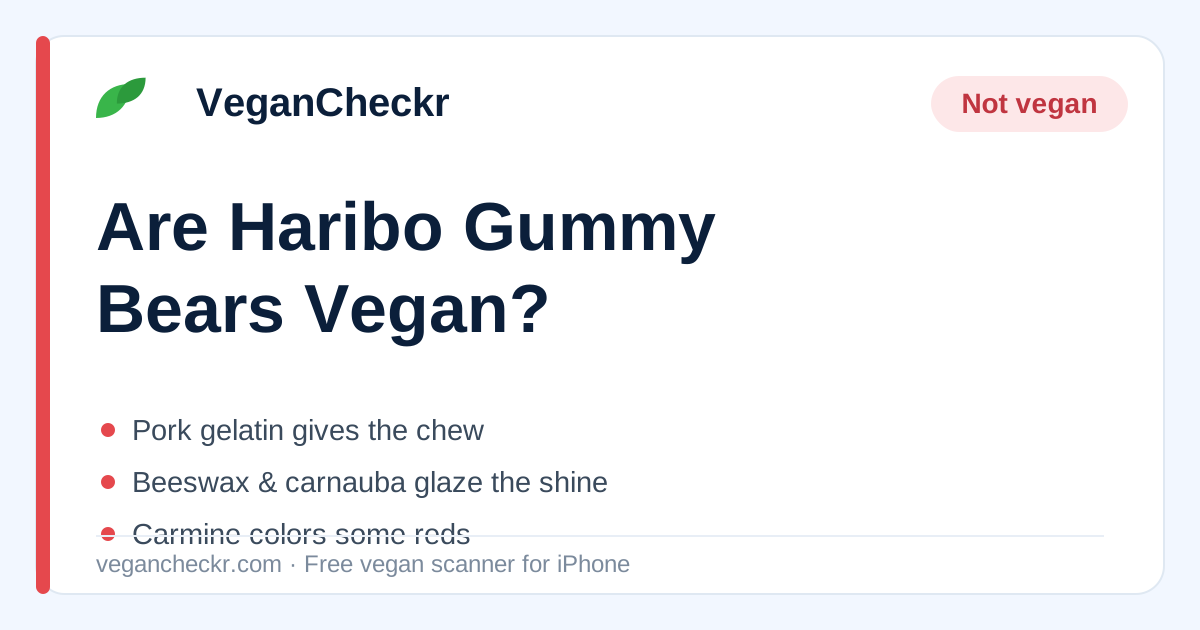
✗ Not vegan Haribo gummy bears are not vegan — or vegetarian. Goldbears are set with pork gelatin and glazed with beeswax, and carmine (E120), a red dye made from insects, appears in some other Haribo sweets. Only a handful of Haribo products are made without animal ingredients.
That's the short version. The longer version is more interesting, because Haribo is a perfect case study in how animal ingredients hide in sweets: one does the setting, one does the shining, and one does the colouring. Learn to spot all three and you can judge almost any gummy on the shelf.
Why aren't Haribo gummy bears vegan?
Haribo gummy bears fail the vegan test on three separate ingredients. The first is structural: Goldbears — like Haribo's whole standard range, from Starmix to MAOAM — are set with pork gelatin, made by boiling animal skin, bones and connective tissue, which rules them out for vegetarians too (halal bags made in Turkey use beef gelatin instead, which changes nothing). The second is the shine: the glaze pairs plant-based carnauba wax with beeswax (E901), an animal product that keeps even gelatin-free Haribo sweets merely vegetarian. The third is colour: carmine (E120), a red dye made from crushed cochineal insects, appears in some Haribo products such as Chamallows. In the UK, gelatin-free lines like Giant Strawbs carry a green vegetarian mark, and a small vegan-friendly corner — Sour Rainbow Strips and Sour Rainbow Twists — skips gelatin and beeswax entirely. For a fully vegan gummy, choose pectin- or starch-set brands such as Candy Kittens, Surf Sweets, Yupik or Annie's.
What's actually in a Haribo Goldbear
The US ingredient list on Haribo's own site reads roughly like this: glucose syrup, sugar, gelatin, dextrose, then small amounts of citric acid, flavours, palm oil, carnauba wax, white and yellow beeswax, and artificial colours (Yellow 5, Red 40, Blue 1).
Recipes differ slightly by country — European bags lean on different colourings, and UK labels spell it "gelatine" — but the base is the same everywhere. According to Haribo's UK website, the entire standard UK range contains gelatin derived from pork, including MAOAM and Chamallows. So the deal-breaker isn't a trace ingredient; it's the main structural one.
The three animal ingredients, at a glance
Two of the three glazing and colouring agents here also have E-numbers you'll meet on other labels. Our complete list of non-vegan E-numbers covers the wider family; these are the ones that matter for Haribo:
| Ingredient | E-number | Source | Vegan? | Vegetarian? |
|---|---|---|---|---|
| Gelatin | E441 (when listed as an additive) | Boiled pork skin and bones; beef in Haribo's halal range | No | No |
| Beeswax | E901 | Secreted by honeybees | No | Yes |
| Carmine | E120 | Crushed cochineal insects | No | No |
| Carnauba wax | E903 | Leaves of the carnauba palm | Yes | Yes |
| Yellow 5, Red 40, Blue 1 | E102, E129, E133 | Synthetic dyes | Yes (by composition) | Yes |
All of these are legal, regulated additives — in the EU they're authorised under Regulation (EC) No 1333/2008 (EUR-Lex). Regulation tells you an additive is safe to eat; it tells you nothing about whether an animal was involved. That part is on you — or on your scanner.
Where the carmine comes in
Goldbears themselves don't rely on carmine: the US bag uses synthetic colours, and other markets use fruit and plant concentrates. But carmine does appear elsewhere in the Haribo range — Chamallows marshmallows have listed E120, and it's a common pick for pink and red sweets generally because it's cheap and stable.
Carmine is made by crushing cochineal insects, so it fails both vegan and vegetarian tests. It also travels under aliases: cochineal, carminic acid, Natural Red 4, or just E120. We break down every name it hides behind in our guide to whether E120 carmine is vegan.
What about halal Haribo?
Haribo produced at the company's factory in Turkey uses halal-certified beef gelatin instead of pork. If your bag says "Made in Turkey" and lists beef gelatine, it's halal — but it's still gelatin from an animal, so it's no more vegetarian or vegan than the German-made original. Don't confuse the halal mark with a vegetarian one.
 Check any sweet in seconds with VeganCheckr
Gelatin, E120, E901 — you don't need to memorise any of it in the sweets aisle:
- Open VeganCheckr and tap Scan, then point your camera at the bag's barcode.
- Read the verdict: vegan, vegetarian or non-vegan — Haribo Goldbears come back non-vegan with gelatin flagged as the evidence.
- No barcode result? Use the ingredient scan to photograph the printed label and catch beeswax or carmine directly.
Which Haribo sweets are vegetarian or vegan?
Here's the twist most people miss: Haribo does make gelatin-free sweets, and in the UK they carry a round green vegetarian mark on the front of the packet. Most of them still aren't vegan, because beeswax stays in the recipe as a glazing agent.
| Status | Haribo products (UK range, as of 2026) | Why |
|---|---|---|
| Not vegetarian | Goldbears, Starmix, Tangfastics, Supermix, Chamallows, MAOAM | Pork gelatin (beef in the halal range); carmine in some |
| Vegetarian | Giant Strawbs, Giant Trees, Jelly Beans, Rotella, Sour Sparks, Starfish, Strawberry Twists, Funny Mix | Gelatin-free, but most keep a beeswax (E901) glaze |
| Vegan-friendly | Sour Rainbow Strips, Sour Rainbow Twists (some lists add Rainbow Spaghetti and the Soft Jelly Bears jar) | Made to recipes without gelatin or beeswax |
Treat this table as a snapshot, not a promise. Haribo reformulates, line-ups differ by country, and a product that was vegan-friendly last year can quietly regain beeswax. The green vegetarian flash — or a scan of the exact bag in your hand — beats any list on the internet, including this one.
Every gummy answers two questions: what makes it set, and what makes it shine. Gelatin usually answers the first, beeswax or shellac the second — and neither answer is vegan.
Shellac (E904), by the way, is the other insect-derived glaze to know. Haribo favours beeswax and carnauba, but plenty of shiny sweets use shellac instead — one more reason glazing agents deserve a spot on your hidden animal ingredients watchlist.
Vegan gummy bear alternatives that actually deliver
The good news: gelatin is entirely replaceable. Pectin (from fruit) and starch produce a softer, cleaner bite, and a growing shelf of brands has built exactly the sweet Haribo won't. Worth trying:
- Candy Kittens (UK) — gourmet gummies made with plants instead of gelatin, in flavours like wild strawberry and sour watermelon.
- Surf Sweets Organic Gummy Bears (US) — organic, pectin-based bears; the Sour Berry Bears add vitamin C from fruit juice.
- Yupik Organic Fruit Gummy Bears — certified organic, gluten-free and fully vegan.
- Annie's Organic Bunny Fruit Snacks — starch-set fruit snacks with no artificial colours or flavours.
- Haribo's own vegan-friendly lines — the sour Rainbow range above, if your local shop stocks it.
One caution: "gelatin-free" on the front never guarantees vegan on the back. Check for beeswax, carmine and honey before you celebrate — the same three suspects, every time. If sweets are your weak spot, our roundup of accidentally vegan snacks and the verdict on Skittles will save you more label-squinting. And if it's the squishy Chamallows you'll miss most, there are genuinely good vegan marshmallow brands too.
Build your own vegan sweets shelf
Finding a replacement is a one-time job if you let the app remember it:
- Scan a candidate gummy — VeganCheckr shows the verdict and any flagged ingredients.
- Add a personal avoidance alert for gelatin or E120 so borderline products get flagged instantly.
- Save the winners to saved products, and browse the suggested alternatives in the same category next time a scan comes back non-vegan.
The wider principle — why beeswax and carmine sit outside a vegan diet at all — comes down to The Vegan Society's definition: avoiding animal exploitation as far as practicable. An ingredient made by bees or from insects is still an animal ingredient, however small the print.
Frequently asked questions
Do Haribo gummy bears contain pork gelatin?
Yes. Haribo's standard range — including Goldbears, Starmix and MAOAM — uses pork-derived gelatin. Haribo made at the company's Turkish factory uses halal-certified beef gelatin instead. Both are animal products, so neither version is vegetarian or vegan.
Are any Haribo sweets vegan?
A few, mostly in the UK range. Sour Rainbow Strips and Sour Rainbow Twists have been made to a vegan recipe without gelatin or beeswax, and some lists add Rainbow Spaghetti. Recipes and availability change, so always check the packet for a vegan label.
Are Haribo Goldbears vegetarian?
No. Gelatin is made by boiling animal skin, bones and connective tissue, which rules Goldbears out for vegetarians as well as vegans. Haribo's gelatin-free sweets carry a green vegetarian mark on the front of the packet.
Is the beeswax in Haribo vegan?
No. Beeswax (E901) is secreted by honeybees, so it is an animal product — acceptable to most vegetarians but not vegan. That is why several gelatin-free Haribo sweets are labelled vegetarian rather than vegan.
Which gummy bears are vegan?
Look for gummies set with pectin or starch instead of gelatin: Candy Kittens, Surf Sweets Organic Gummy Bears, Yupik Organic Fruit Gummy Bears and Annie's Organic Bunny Fruit Snacks are all made without gelatin. Scan the barcode to confirm the exact recipe in your country.
Check any product in seconds
VeganCheckr scans barcodes and ingredient labels, flags hidden animal ingredients and E-numbers, and shows you the evidence. Free on the App Store.

 Scan with your iPhone camera